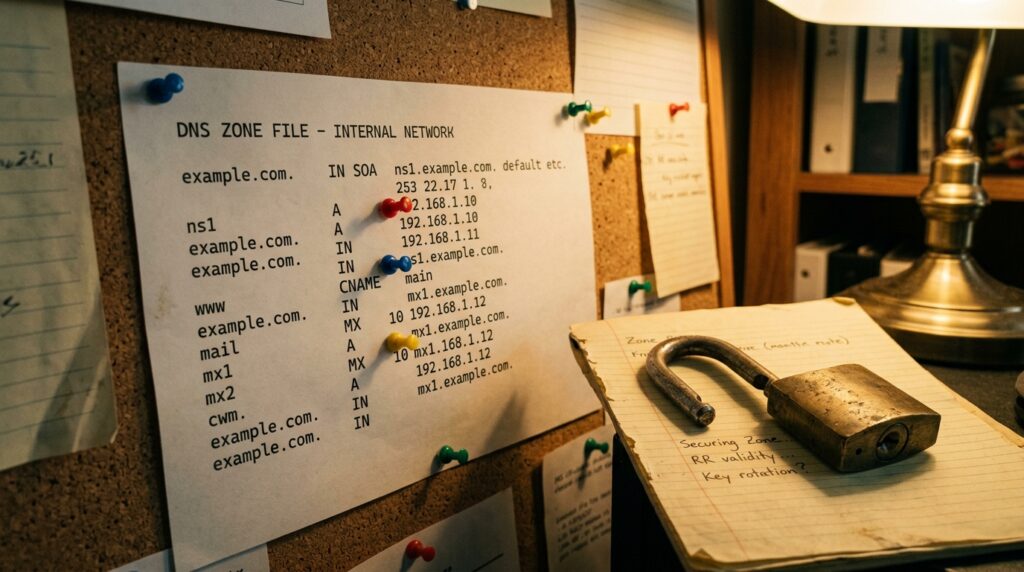
Your Terraform state says one thing. Your actual cloud environment says another. If you have ever stared at an unexpected resource configuration in production and wondered how it got there, you already understand why infrastructure as code drift detection has become one of the most pressing operational challenges for platform teams in 2026.
Drift is not a new problem, but it is getting harder to ignore. As organisations scale their IaC footprints across multiple cloud regions, teams, and environments, the gap between declared state and live reality widens. And for infrastructure teams operating under European compliance frameworks like NIS2 or sector-specific data residency requirements, that gap is not just a technical inconvenience. It is a potential audit finding.
So let us get into what drift actually is, why it keeps happening despite good intentions, and what mature teams are doing to catch it before it causes real damage.
What cloud configuration drift actually looks like
Drift happens when the real state of your infrastructure diverges from what your IaC tooling expects. Someone logs into the AWS console and tweaks a security group rule. A colleague runs a one-off CLI command to resize a database instance during an incident. An automated process modifies a tag. None of these feel significant in the moment, but they all create IaC drift in your cloud environment.
The insidious part is that drift accumulates silently. A single untracked change is easy to overlook. Fifty of them, spread across a dozen modules and three environments, is a different story entirely. By the time someone runs terraform plan and sees a wall of unexpected diffs, untangling what changed, when, and why becomes a significant investigation.
The manual change problem
Most drift originates from manual intervention. Incidents create pressure to act fast, and the fastest path is often direct console access rather than a full IaC pipeline run. This is understandable. It is also exactly how configuration debt accumulates.
Some drift comes from external systems: cloud provider automation, third-party integrations, or even the provider itself modifying default settings after a policy update. You cannot always prevent these changes, which makes detection even more important.
Why Terraform drift detection is harder than it sounds
Terraform is the dominant IaC tool for a reason, but its native drift detection story has historically been limited. Running terraform plan will show you drift, but only if you run it, only against one workspace at a time, and only if your state is actually up to date.
At scale, this creates real gaps. Consider a team managing thirty Terraform workspaces across two cloud providers. Running plans manually across all of them is not realistic. Scheduling them in CI/CD pipelines helps, but pipeline runs are often triggered by code changes, not by calendar. A workspace that has not had a commit in three weeks might be silently drifting the entire time.
Key takeaway: Drift detection is only useful if it is continuous and automated. A plan you run once a week is not a detection strategy; it is a periodic snapshot with large blind spots between checks.
Tools like Terraform Cloud and Spacelift offer drift detection as a managed feature, running speculative plans on a schedule and alerting when drift is found. Open-source alternatives like Atlantis can be configured similarly, though they require more operational investment to maintain. The right choice depends on your team size, your existing toolchain, and how much you want to self-host.
Detection is only half the answer
Knowing that drift exists is genuinely useful. Knowing what to do about it is where teams often stall.
There are broadly three responses to detected drift. First, you can reconcile it by updating your IaC to match the live state, effectively codifying the change after the fact. Second, you can remediate it by reverting the live environment to match the declared state. Third, in some cases, you simply document it as an accepted exception and move on.
Reconcile, remediate, or accept?
The right answer depends on context. If a security group was changed during an incident and the change is actually correct, reconciling it into your codebase is the responsible move. If a resource was accidentally misconfigured, remediation is the right call. If a cloud provider silently added a default tag, accepting and documenting that exception might be the most pragmatic path.
What matters is that the decision is deliberate and recorded. Drift that is acknowledged and documented is very different from drift that is simply unknown. For teams operating under compliance obligations, that distinction can be the difference between a clean audit and an uncomfortable conversation.
Cloud infrastructure consistency in a European context
For European infrastructure teams, cloud configuration drift carries additional weight. Regulations like NIS2, DORA (for financial services), and various national data protection frameworks require organisations to demonstrate control over their infrastructure at any given point in time.
An environment where the actual configuration regularly diverges from the declared configuration is difficult to audit credibly. Regulators and auditors increasingly expect organisations to show not just what their infrastructure looks like today, but how it has changed over time and who authorised those changes.
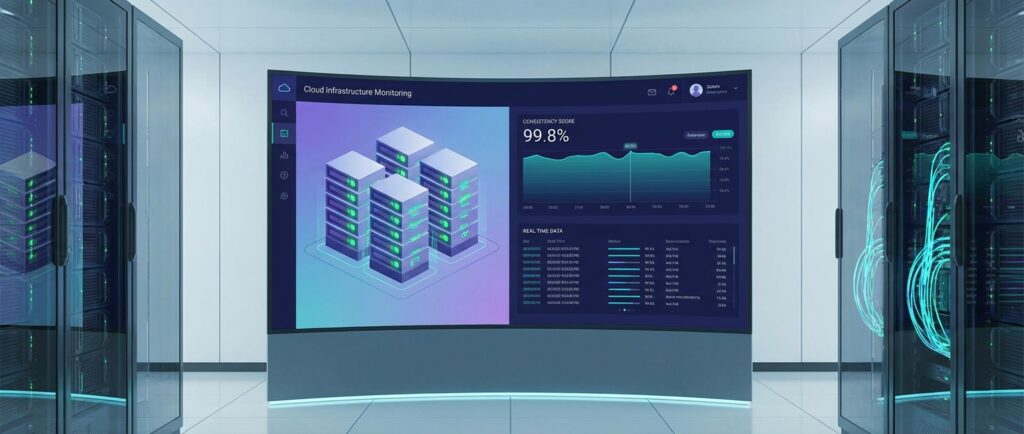
This is one of the reasons that cloud infrastructure consistency has become a selling point for managed cloud providers operating in Europe. When your provider can demonstrate that your environment is continuously validated against a known-good state, and that any deviations are logged, alerted, and actioned, that is a meaningful operational guarantee. It shifts drift detection from a nice-to-have into a core part of your compliance posture.
Practical steps to reduce drift in 2026
- Enforce least-privilege access to live environments. If engineers cannot make ad-hoc changes through the console or CLI, the most common source of drift disappears. This is uncomfortable at first, but it pays dividends quickly.
- Schedule speculative plan runs on all workspaces, not just the ones that are actively being developed. Stale workspaces drift just as readily as active ones.
- Integrate drift alerts into your existing incident workflows. A Slack notification that nobody reads is not a process. Drift findings should create tickets, trigger reviews, and have clear ownership.
- Use policy-as-code tools like Open Policy Agent or Sentinel alongside your IaC tooling. These can catch configuration patterns that should never exist regardless of whether they came from code or from manual changes.
- Treat your state files as critical infrastructure. State corruption or staleness is a common cause of false drift reports. Remote state with locking, versioning, and access controls is non-negotiable at any meaningful scale.
The operational maturity question
Here is something worth sitting with: most teams that struggle with drift are not struggling because they lack the right tools. They are struggling because drift detection requires sustained operational discipline, and that is genuinely hard to maintain as teams grow and priorities shift.
The organisations that handle this well tend to treat IaC consistency as an ongoing operational practice rather than a one-time implementation project. They review drift reports in regular rituals. They hold engineers accountable for reconciling changes. They build the feedback loops that make manual changes feel like the exception rather than the norm.
If your team is not there yet, the most useful thing you can do right now is start measuring. You cannot improve what you cannot see. Enable scheduled plan runs, start tracking how many drift findings you generate per week, and watch what happens over the next quarter. The data will tell you where to focus.