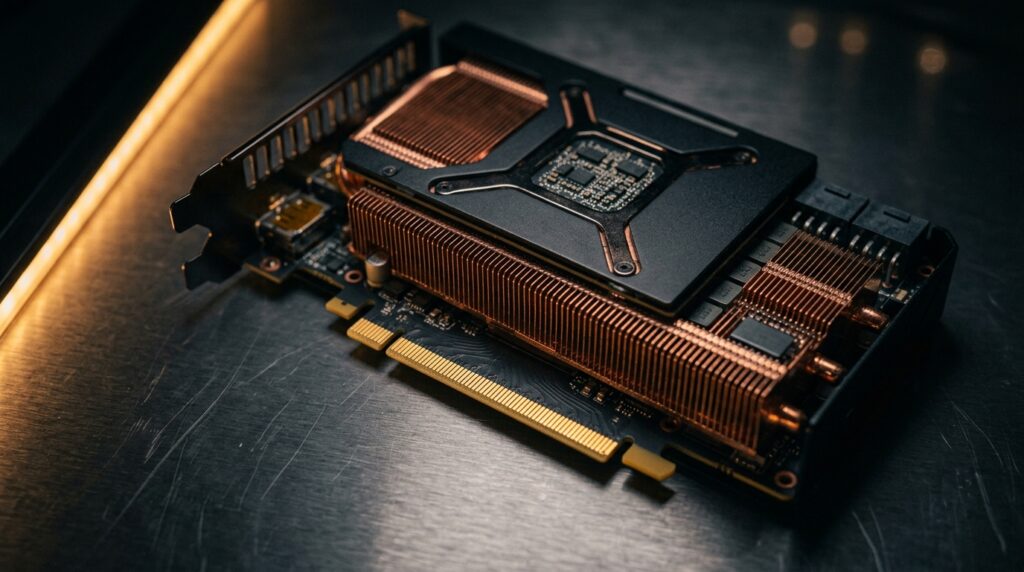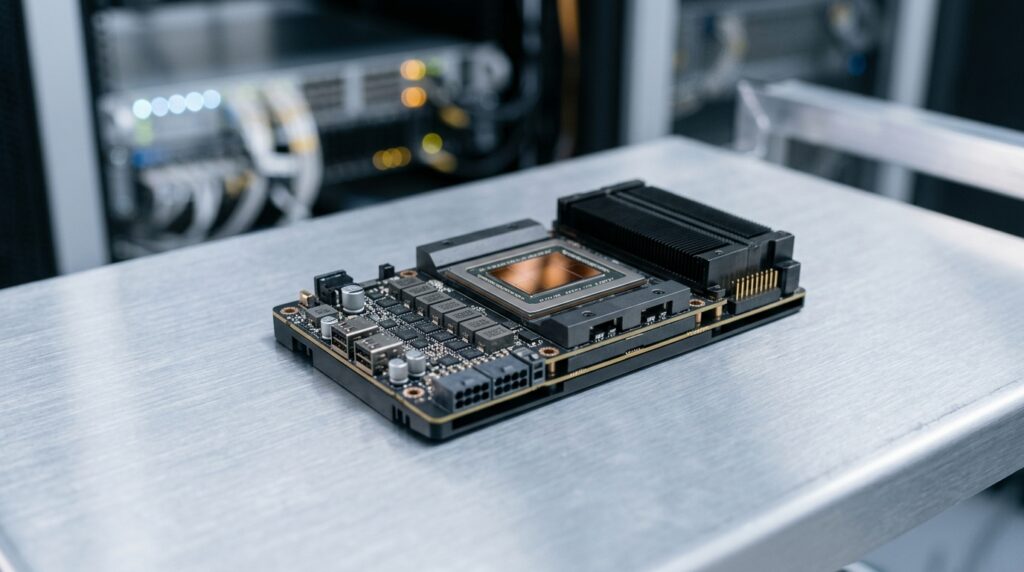
H100 spot prices have dropped more than 60% from their 2023 peak. Hundreds of new GPU cloud providers entered the market in 2025. Hyperscaler on-demand rates are finally moving. If you are planning AI infrastructure spend for the next 12 to 18 months, the signals look contradictory, and acting on the wrong one is expensive. Here is what the market actually shows, and how to build a procurement posture around it.
The price collapse is real, but it is not uniform
H100 rental rates fell from around $8 per GPU-hour at peak to roughly $2.85–$3.50 on most mid-market platforms. The Silicon Data H100 Rental Index sat at $2.36 in June 2025, down 23% from $3.06 the previous September. AWS cut P5 instance prices approximately 44% in June 2025. At the low end of the verified market, some providers now list H100 capacity below $1.40 per hour.
That range, from under $1.40 to nearly $7 per hour for the same silicon, is the story. Hyperscalers charge two to three times more than marketplace providers because their pricing bundles reservation-based capacity and enterprise SLAs. The headline collapse happened in the commodity tier; hyperscaler on-demand rates for H100 8-GPU instances still run $55–$60 per hour on AWS and close to $98 on Azure in US regions. That translates to roughly $6.88–$12.25 per GPU-hour on-demand, a very different number from the spot index.
Meanwhile, the newest generation is moving in the opposite direction. The B200 GPU rental index surged 24% in March 2026 while H100 prices barely shifted. AWS raised prices for EC2 Capacity Blocks for ML by approximately 15% in early 2026. The market has bifurcated: mature-generation silicon is commoditising, next-generation silicon is tightening.
Supply is not a simple glut
The H100 shortage that defined 2023 and early 2024 has eased substantially. Over 300 new providers entered the H100 cloud market in 2025, and that competition drove the commodity price down. For H100 and A100 workloads, supply has normalised.
Blackwell-generation hardware is a different story. TSMC’s CoWoS packaging process, which bonds HBM dies onto the GPU substrate, is fully allocated through at least mid-2027. Microsoft, Google, Meta, and Amazon placed multi-billion-dollar forward orders for GB200 and B200 GPUs in 2025, consuming most of NVIDIA’s available allocation through the end of 2026 and into 2027. NVIDIA’s next-generation Vera Rubin GPUs are expected to reach the market in late 2026, but almost the entire supply will flow to hyperscalers and large reserved customers. Mid-market and enterprise buyers who want Blackwell capacity are facing queues, not spot markets.
The GPU market is not one market. It is a commoditising H100 tier sitting beneath a tightly rationed Blackwell tier, and your procurement strategy needs to address both separately.
On the demand side, there is a meaningful shift underway. AI teams have moved from training large foundational models to fine-tuning open-source models, which reduces the need for massive contiguous GPU clusters. Inference workloads are growing rapidly but they are more distributed, lower per-instance, and more price-sensitive than training. That shift is one reason H100 commodity prices fell: the use case driving extreme cluster demand has partially rotated.
Hyperscalers are not retreating
The “bubble bursting” framing is hard to square with hyperscaler capital expenditure. The Big Five (Amazon, Alphabet, Microsoft, Meta, Oracle) are collectively forecast to exceed $600 billion in capex in 2026, a 36% increase over 2025, with roughly 75% of that tied directly to AI infrastructure. Google, Amazon, Meta, and Microsoft alone are projected to spend around $725 billion on AI infrastructure in 2026, up 77% from $410 billion in 2025.
What is happening is not a retreat. It is a consolidation of supply at the top. Hyperscalers are locking in the next generation of GPU capacity for themselves and their largest customers, while the previous generation commoditises in the open market. If your workload depends on Blackwell or later silicon, the hyperscaler premium is not going away; it is being structurally reinforced.
Reserved, spot, or bare metal: the actual decision
The procurement question for most European IT teams right now is not whether GPU prices are falling. It is which pricing structure fits your workload profile over the next 12 to 24 months.
Spot and on-demand make sense for bursty, interruptible workloads: batch inference jobs, experimentation, model evaluation. The commodity H100 market is genuinely competitive here. The risk is availability; spot pools drain under load, and the providers offering $1.40/hr rates are not always the ones with guaranteed SLAs or enterprise support.
Reserved capacity at hyperscalers offers 20–40% discounts versus on-demand, but the short end of the market has largely disappeared for premium GPUs. In 2026, providers are generally unwilling to sign contracts shorter than six months for H100 or H200, and the preferred term is one to two years. Teams that locked in 1-year H100 reservations at 2024 peak prices are now paying well above current spot rates with no exit. Before committing, model your actual utilisation: a reservation only saves money if the instance runs at high utilisation for the full term.
Bare metal GPU changes the economics materially for teams running sustained, predictable workloads. You eliminate the hypervisor layer, get deterministic memory bandwidth and NVLink topology, and pay for the hardware rather than the abstraction. The trade-off is operational overhead and the need for a provider whose network reach matches your latency requirements.
This is where infrastructure connectivity becomes a real variable. We operate 44 points of presence across Europe and the Middle East and maintain direct peering with AWS, Azure, GCP, Oracle, and Cloudflare at all sites. For teams running hybrid architectures, where training runs on dedicated GPU bare metal and inference or data pipelines connect to hyperscaler services, that peering eliminates the egress and latency overhead that makes hybrid designs painful in practice. The GPU budget conversation and the network budget conversation are the same conversation.
How to build your AI compute budget for 2026 and beyond
A few concrete principles that hold regardless of how the market moves in the next quarter:
- Separate your H100 and Blackwell strategies. H100 commodity capacity is available and competitive; lock in six-month terms if you have predictable utilisation, but avoid longer commitments given the price trajectory. Blackwell capacity requires earlier reservation and a clearer business case.
- Model utilisation before reserving. A 30% discount on a reservation you use at 40% capacity is not a saving. Calculate your break-even utilisation rate before signing.
- Audit the hyperscaler premium. On-demand hyperscaler rates for H100 are two to three times the commodity market. If you are paying that premium for SLA and support, quantify what you are getting. If you are paying it out of inertia, that is a budget line worth renegotiating.
- Evaluate bare metal for sustained inference. For production inference serving with predictable traffic, bare metal GPU with a transparent pricing structure typically outperforms reserved cloud instances on a total cost basis over 12 months.
- Account for egress and connectivity in the total cost. A cheap GPU instance connected to your data pipeline over expensive cross-provider transit erodes the saving quickly. Network architecture is part of the compute cost.
The GPU market in 2026 rewards specificity. The teams that will optimise their AI infrastructure budgets are the ones that stop treating “GPU cloud pricing trends” as a single variable and start treating compute, network, and contract structure as a system. The softening in H100 spot prices is a genuine opportunity to renegotiate or restructure, but only if you move before the next generation of scarcity sets in at the Blackwell tier.