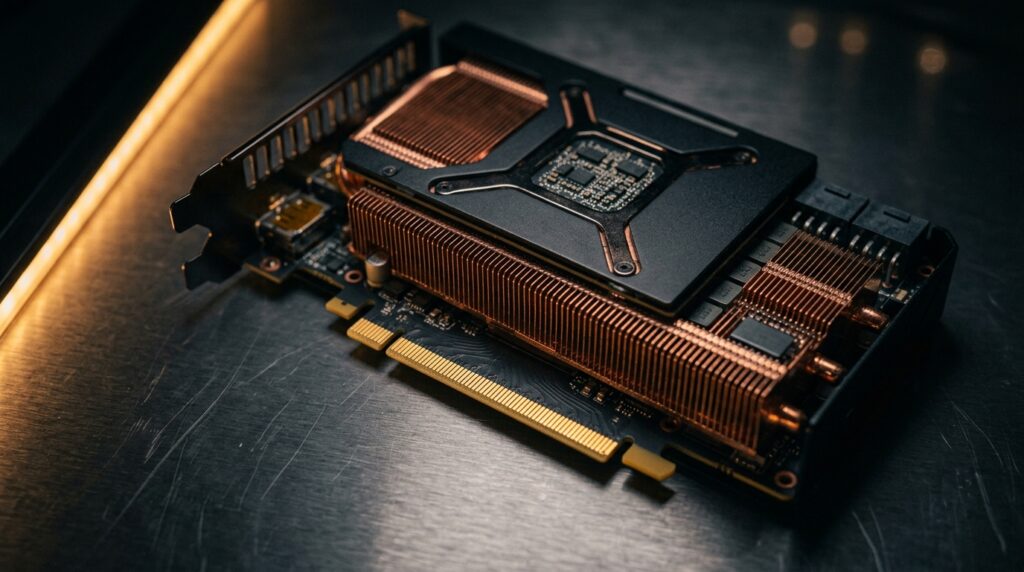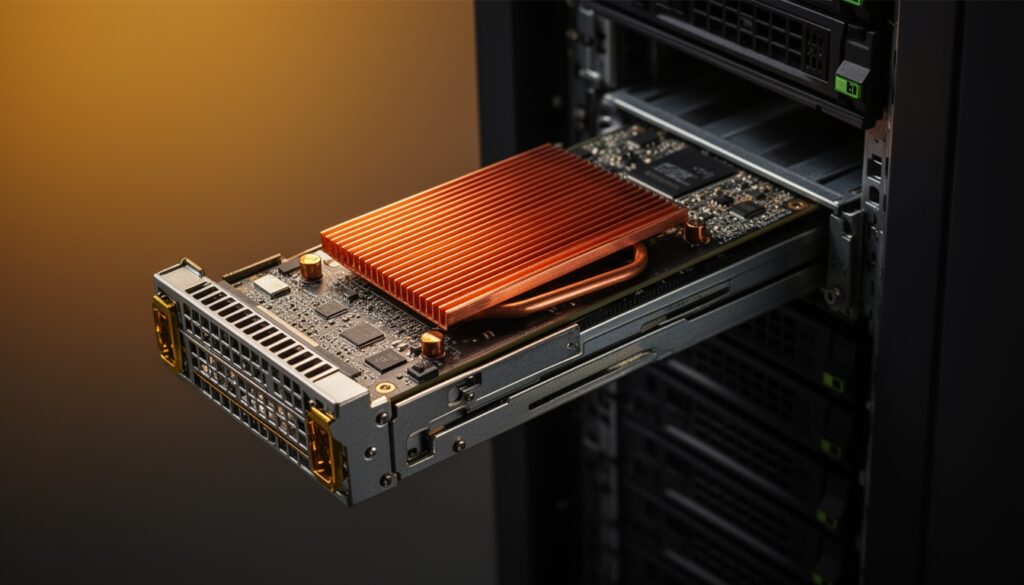
The data centre industry is undergoing its most consequential structural shift since the virtualisation era. The driver is not training the next frontier model; it is serving the ones that already exist. AI inference infrastructure is rapidly becoming the dominant investment thesis for hyperscalers, colocation operators, and cloud providers alike, and European IT teams need to understand what that means for procurement, cost, and where their workloads actually run.
The numbers are hard to ignore. Global AI infrastructure spending reached $318 billion across 2025, more than double the $153 billion recorded in 2024, according to IDC. The five largest spenders, Microsoft, Amazon, Alphabet, Meta, and Oracle, have guided toward a combined $635 to $690 billion in 2026 capital spending. IDC projects the market will surpass $1 trillion by 2029. This is not a bubble being inflated by speculation; it is the largest private technology investment cycle in recorded history, and the centre of gravity is shifting from building models to running them.
Inference now accounts for an estimated 60 to 70 percent of total AI compute demand across major hyperscalers, up from roughly 40 percent in 2024. McKinsey projects that by 2030, AI inference will jump from 20.9 GW of power demand to 93.3 GW, a 35 percent compound annual growth rate, overtaking non-AI workloads entirely by 2029. The AI inference market itself is forecast to grow from $106 billion in 2025 to $255 billion by 2030. Training built the campuses. Inference is choosing the markets.
Training and inference are different infrastructure problems
The shift matters operationally because training and inference impose fundamentally different requirements on facilities, and conflating them leads to bad procurement decisions. Training workloads are latency-insensitive; they can tolerate delays of up to 100 milliseconds between adjacent regions, which lets operators site them in remote, power-rich locations. A single rack of modern training GPUs can consume 100 kW to more than 300 kW, demanding Direct-to-Chip Liquid Cooling or rear-door heat exchangers because air cooling cannot physically dissipate that load.
Inference is the opposite. It is latency-sensitive by definition: the user is waiting. Inference racks typically operate at 30 to 150 kW per rack, which gives operators more flexibility in cooling design, but the network requirements are strict. Inference workloads increase the value of facilities with dense interconnection ecosystems, strong external peering, and proximity to end users. That is a different site selection calculus entirely from the remote campus model that dominated the training build-out of 2023 and 2024.
Training optimises for raw compute density. Inference optimises for latency, connectivity, and energy efficiency simultaneously. Facilities that do one well do not automatically do the other.
GPU supply constraints are a real procurement risk
NVIDIA commands approximately 88 percent of the AI accelerator market, driven by its H100 and Blackwell GPUs. Those GPUs are designed in the United States but produced almost entirely in Taiwan. CSIS notes that planned US fabrication facilities are unlikely to open before 2028 at the earliest, meaning supply chain concentration in Taiwan is structural, not transitional.
The practical consequence for buyers is already visible. SemiAnalysis has reported that all on-demand GPU capacity coming online through August or September 2026 has already been reserved, with lead times for new Blackwell deployments stretching into June or July. Contract prices for H100s rose from $1.70 per GPU-hour in October 2025 to $2.35 per GPU-hour by March 2026, a 40 percent increase in five months for a two-generation-old chip. Spot availability is tight even for older GPU generations.
For European teams building AI inference capacity, this means the question is not only which GPU to run but which provider has committed supply and when. Capacity that does not exist on contract is capacity that cannot be planned around.
What on-demand GPU inference actually costs in Europe
H100 pricing across tracked providers currently ranges from $0.50 per GPU-hour on spot instances to nearly $15 per GPU-hour depending on provider, instance type, and billing model, with an average across 45 tracked providers sitting at approximately $3.31 per hour. Hyperscale clouds typically price the same hardware at the higher end of that range, and their pricing does not always reflect the egress costs, data residency constraints, or compliance overhead that European workloads carry.
Chips account for roughly 60 percent of total AI data centre investment, according to McKinsey’s 2025 analysis. The remaining 40 percent covers power, cooling, construction, networking, and land. For European operators, energy costs and regulatory requirements around data handling add further dimensions that a raw per-GPU-hour price does not capture. A model running on a US hyperscaler’s European region is still subject to that provider’s global data governance structure, which has direct implications for GDPR compliance and Schrems II risk.
Why facility location is an inference-era decision
We operate our AI inference and training infrastructure across four carrier-neutral sites: MAD1 in Madrid, MUC1 in Munich, HEL1 in Helsinki, and AMS1 in Amsterdam. HEL1 runs on 100 percent green energy with free cooling, which materially changes the economics of power-dense GPU workloads. MUC1 serves the finance and industrial sector where latency and data residency requirements are among the strictest in Europe. MAD1 doubles as our LATAM connectivity hub. All four sites peer directly with AWS, Azure, GCP, Oracle, and Cloudflare, which matters specifically for inference: a workload that calls external APIs or returns results to users distributed across a hyperscaler’s CDN benefits from that peering at every request.
Our 44 points of presence across Europe and the Middle East are not a vanity metric for an inference-era architecture. Low-latency inference at scale requires network fabric that reaches users, not just compute that reaches the internet.
The business model shift and what it means for buyers
The hyperscalers are not building inference capacity as a side effect of training investment. They are building it as a revenue model: sell access to models at per-token or per-request pricing, amortise GPU capex over millions of API calls, and lock customers into proprietary model APIs that are difficult to migrate away from. AI colocation revenue for training and inference combined is forecast to grow at a 77 percent CAGR from 2025 to 2030, reaching $134 billion by decade’s end, with AI accounting for roughly 44 percent of total global colocation market revenue by 2030.
For European buyers, the relevant question is not whether to use GPU inference infrastructure but on whose terms and under whose legal jurisdiction. Running AI inference on infrastructure subject to European law, operated by a company with no foreign parent and no exposure to extraterritorial data access regimes, is not a compliance checkbox. It is the architecture. We offer GPU inference and training capacity under those conditions, contractually backed by a 99.9 percent uptime SLA, at sites that were built for exactly the latency and connectivity profile that inference workloads demand.
The investment cycle is real, the infrastructure requirements are distinct from what came before, and the supply constraints are structural. European teams that treat GPU inference procurement as a commodity purchase will find themselves either locked into hyperscaler pricing and governance, or waiting in a queue that stretches into late 2026. The address matters when the workload is critical.