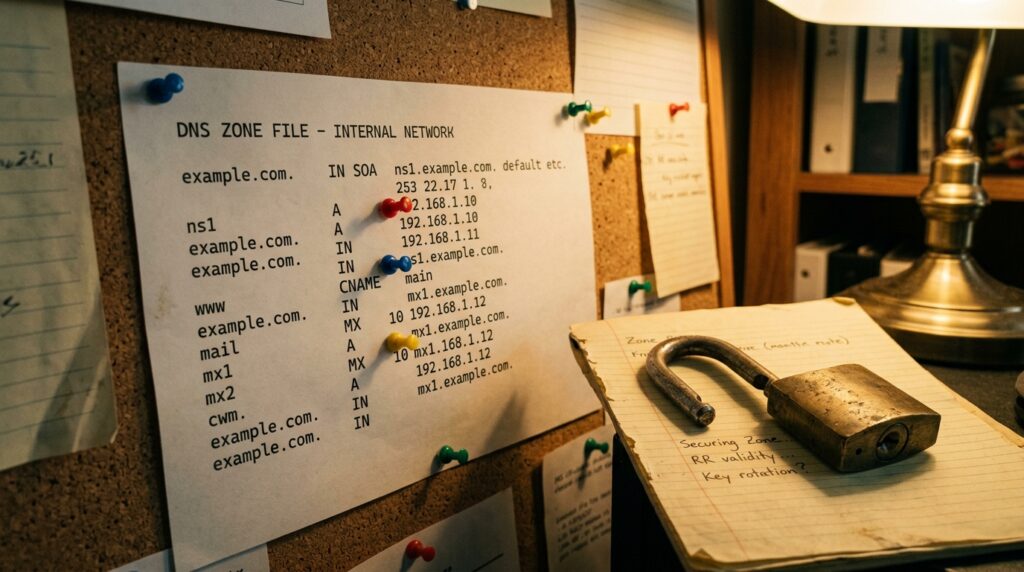
An end-of-life operating system sitting inside a hospital network or energy management system is a known liability. Connect that system to a cloud environment, and the liability compounds. Every new integration point becomes a potential pivot for an attacker who already knows the unpatched CVEs by heart, because Microsoft stopped publishing fixes for them years ago. This is not a theoretical risk: it is the operational reality for a significant share of European critical infrastructure in 2025, and NIS2 and DORA have made it a legal one too.
The pattern is consistent across sectors. A system was deployed for reliability and uptime, not cyber resilience. It worked. Nobody touched it. Then cloud connectivity arrived, either through a monitoring agent, a hybrid identity integration, or a managed service handoff, and a sealed environment became an open one. The OS underneath never changed.
Legacy OS cloud security is not just a patching problem. It is an architectural problem that gets harder to solve the longer it compounds.
What end-of-life actually means for your attack surface
Windows Server 2008 R2 reached end of extended support in January 2020. Server 2012 R2 followed in October 2023. Server 2016, which still runs a meaningful portion of European enterprise workloads, loses extended support on January 12, 2027. After that date, Microsoft will stop releasing security patches for it entirely.
Microsoft does offer Extended Security Updates (ESU) for Server 2016 purchasable for up to three years beyond the EOL date. That buys time, but it does not change the underlying architecture, and it does not satisfy a regulator asking whether your ICT risk management programme is fit for purpose. ESU is a short-term mitigation, not a strategy.
The real danger of end-of-life Windows in a cloud-connected environment is the compounding nature of unpatched vulnerabilities. Attackers catalogue known CVEs on EOL systems. When those systems gain outbound connectivity to a cloud control plane, a VPN, or a shared identity provider, the blast radius of a compromise expands dramatically. The legacy OS is no longer isolated: it is a beachhead.
An EOL system in an air-gapped OT environment is a patching problem. The same system with a cloud agent installed is a perimeter problem.
NIS2 and DORA close the regulatory escape routes
For years, the implicit argument for tolerating legacy systems was operational: the cost and risk of migration outweighed the theoretical security downside. That calculus has changed sharply since NIS2 entered national law across EU member states in October 2024 and DORA entered application on January 17, 2025.
NIS2 (Directive (EU) 2022/2555) covers 18 essential sectors including energy, transport, and health, plus a second tier of important sectors. Its implementing regulation, EU 2024/2690, addresses patch management explicitly in Annex 6.6, requiring prompt application of patches, testing before production deployment, use of trustworthy sources, and documented handling of cases where patching is not immediately possible. Running an unsupported OS with no available patches is not a documented exception: it is a gap. Fines run to €10 million or 2% of annual global revenue.
DORA (Regulation (EU) 2022/2554) is more specific still. Article 8 states directly that financial entities, other than microenterprises, shall on a regular basis, and at least yearly, conduct a specific ICT risk assessment on all legacy ICT systems, and in any case before and after connecting technologies, applications, or systems. That language was written precisely for the hybrid scenario: a legacy system being integrated with a cloud environment. The assessment requirement is not optional, and it applies before the connection is made, not after an incident surfaces it.
DORA’s Chapter IV adds a testing requirement: all ICT systems supporting critical or important functions must be tested at least once a year. Running an EOL OS that cannot be safely tested, or whose vendor no longer provides security guidance, makes that requirement structurally difficult to satisfy.
Why critical infrastructure patching is harder than it looks
Healthcare and industrial environments have legitimate reasons why critical infrastructure patching lags behind commercial IT. A medical imaging system certified against a specific OS version may void its regulatory clearance if the underlying platform changes. A SCADA controller running a process line cannot take an unplanned reboot. These constraints are real.
But they are not immovable, and regulators are no longer treating them as such. The question NIS2 and DORA ask is not whether you patched, but whether you have a documented, tested, and actively managed risk programme that addresses the gap. An organisation that can demonstrate network segmentation, compensating controls, a migration roadmap with defined milestones, and regular legacy ICT risk assessments is in a fundamentally different position from one that has simply not thought about it.
The cloud migration piece is where many teams underestimate complexity. Lifting a workload that runs on Server 2016 into a cloud environment does not modernise it: it exposes it. The OS is still EOL. The attack surface is now larger. The compliance exposure is unchanged, and in some cases worse because the system now touches regulated cloud infrastructure.
Modernisation without losing control of sensitive workloads
The path forward is not a forced migration to a hyperscaler with uncertain data residency and a contract governed by foreign law. For European enterprises in regulated sectors, the architecture matters as much as the destination.
We operate sovereign cloud infrastructure across four European datacenters: MAD1 in Madrid, MUC1 in Munich, HEL1 in Helsinki, and AMS1 in Amsterdam. All are Tier III, ISO 27001 certified, carrier-neutral, and subject exclusively to European law. When a healthcare operator or energy company moves a sensitive workload off a legacy OS and onto our infrastructure, the data does not leave European jurisdiction, and the contractual 99.9% uptime SLA is written into the agreement, not implied by a service description.
Our managed services give teams a concrete alternative to the false choice between keeping a vulnerable legacy system running and accepting the risks of an uncontrolled migration. We can take on patch management, OS lifecycle tracking, and hybrid connectivity design for workloads that need to move gradually, with compensating controls documented at each stage. For teams facing a Server 2016 deadline in January 2027, that runway exists now, not after an incident or a regulatory finding.
Direct peering with AWS, Azure, GCP, Oracle, and Cloudflare at all four sites means hybrid architectures do not sacrifice performance to gain sovereignty. You can keep a legacy workload on managed bare metal while its dependencies migrate to cloud-native services, with low-latency connectivity between them throughout the transition.
The compounding problem has a compounding cost
Every quarter a legacy OS remains connected to cloud infrastructure without a documented risk programme is a quarter of accumulated exposure: unpatched CVEs, regulatory non-compliance, and an attack surface that grows with each new integration. NIS2 and DORA did not create this problem, but they have made the cost of ignoring it concrete and calculable.
The Server 2016 deadline is January 12, 2027. That is close enough to plan against now, and far enough that a structured migration can be done properly rather than reactively. The question is whether your organisation treats it as a project or waits until it becomes an incident.