The numbers are no longer hypothetical. European datacenter power demand stood at 18.7 GW at the end of 2024 and is projected to reach 36 GW by 2030, according to S&P Global Market Intelligence 451 Research. In energy terms, that means climbing from roughly 145 TWh in 2025 to 238 TWh by 2030. The IEA puts it plainly: installed capacity in Europe is projected to grow by just 70% compared to 2024, while the project pipeline implies around 130% growth. Roughly half of what is planned will not materialise on time.
Gartner frames it as a power wall: grid supply may simply be unable to keep pace with compute demand by 2030. AI is the accelerant. Surging demand for accelerated compute is driving what Gartner calls unprecedented datacenter power growth, and capacity is now constrained not by hardware availability but by the ability to plug into the grid at all.
For IT decision-makers choosing where to place infrastructure over the next five years, this is not a background risk. It is the central variable in any European datacenter strategy.
Why the traditional hubs are running out of road
Most installed European datacenter capacity sits in Frankfurt, London, Amsterdam, Paris, and Dublin, the FLAP-D cluster. Both Dublin and Amsterdam have already had to pause new projects, citing grid unavailability and the inability to integrate large new power loads. Grid connection wait times in these hubs average seven to ten years. A datacenter takes one to two years to build. The mismatch is structural, not temporary.
Germany carries the heaviest datacenter load in Europe at 4.26 GW in 2025, followed by the UK at 3.69 GW and France at 1.72 GW. ACER reported that direct grid congestion costs across Europe reached EUR 4.3 billion in 2024. The IEA warns that unless significant investment goes into transmission infrastructure, up to 20% of planned datacenter projects face delays. Speculative grid connection requests are making the situation worse, inflating demand signals and complicating planning for transmission system operators.
The conclusion for cloud operators is straightforward: building in saturated markets is a capacity gamble, not a strategy. The smarter move is geographic diversification toward regions where grid capacity, renewable supply, and natural cooling align.
The geographic shift already underway
Nordic and Southern European markets have seen demand grow 110% compared to only 55% in FLAP-D markets. By 2035, analysts estimate that 50% of Europe’s datacenter capacity will sit outside the traditional hubs. Spain, Portugal, Italy, Greece, and Slovakia are each projected to see three- to fivefold capacity growth by 2035. Madrid alone has plans to add up to 10 GW of new capacity, backed by strong solar generation potential and improving grid infrastructure across the Iberian Peninsula.
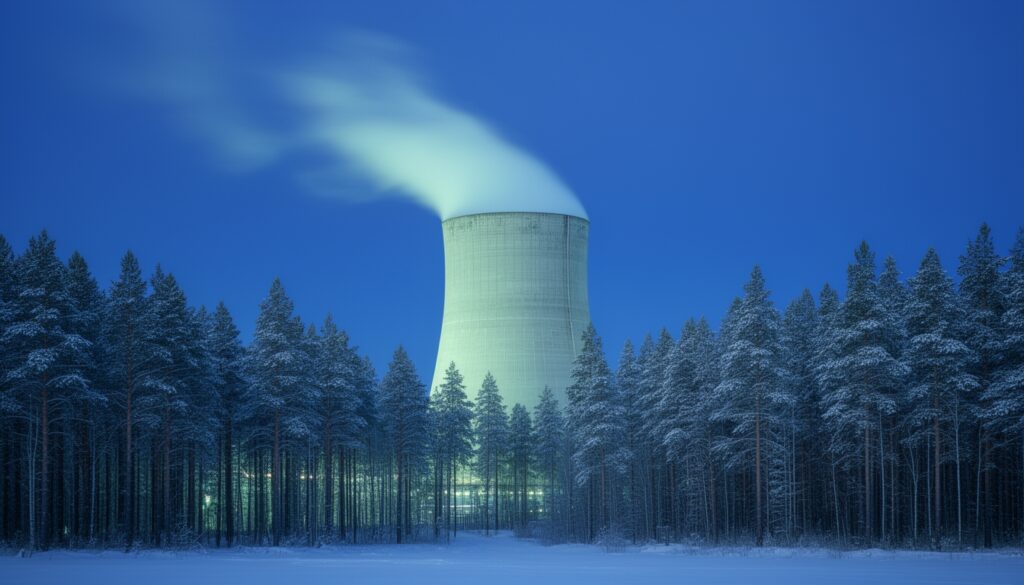
Finland presents a different kind of advantage. Cold climate means free air cooling is available for eight to ten months per year, enabling facility PUE below 1.2. Over 40% of Finnish electricity generation comes from renewables, primarily Nordic wind and hydroelectric systems. Helsinki has gone further: Helen, the city’s energy company, enables waste heat recovery from datacenters into the district heating network. One datacenter can heat up to 20,000 apartments, directly displacing fossil fuel use. Helen completed its coal phase-out in 2025 and is committed to stopping all combustion by 2030.
When a facility’s cooling is provided by the climate and its waste heat warms a city, the energy equation looks fundamentally different from a diesel-backed hall in a congested urban grid zone.
How DIVERSITY is approaching this across its site portfolio
We operate our HEL1 facility in Helsinki specifically because the physics work in our favour. Free cooling, a renewable grid, and the Helen waste heat integration framework mean that running at high utilisation in Helsinki is structurally cheaper and cleaner than the equivalent workload in a FLAP-D market. For customers with green energy reporting obligations or sustainability targets embedded in procurement, this is not a marketing point; it is a measurable difference in their Scope 2 emissions accounting.
Our MAD1 facility in Madrid sits in a market that is actively building out solar-grid capacity at scale. Southern Europe’s solar potential is not just about renewable credentials; it translates to grid resilience and competitive power pricing as the region adds generation. For customers serving Southern European and Latin American markets, MAD1 combines low-latency geography with a power supply trajectory that is moving in the right direction while FLAP-D markets queue for grid connections.
MUC1 in Munich serves the DACH finance and industrial cluster, where proximity and jurisdictional certainty matter as much as power economics. Tier III infrastructure, ISO 27001 certification, and a contractual 99.9% uptime SLA are the baseline; our direct peering with AWS, Azure, GCP, Oracle, and Cloudflare at all sites means customers are not trading connectivity for sovereignty.
Datacenter power density planning: what operators need to get right now
Average new-build datacenter utility power is forecast to rise from roughly 47 MW in 2025 to almost 110 MW by 2030, driven by AI rack densities that can reach 100 kW per rack or more. This has direct implications for facility design, cooling architecture, and power distribution. Operators who planned their infrastructure around 5-10 kW per rack assumptions are facing retrofits; those who built for density from the start are not.
For enterprise IT teams, the practical question is whether their chosen cloud or colocation provider has the power headroom to grow with them. Grid connection timelines mean that capacity not secured today will not be available in 2027 or 2028. Asking a provider for their grid connection status and capacity roadmap is no longer a niche due-diligence question; it belongs in every infrastructure procurement conversation.
Sustainable datacenter strategy in Europe now means choosing sites where the grid is not already saturated, where renewables reduce both cost volatility and compliance exposure, and where physical infrastructure was designed for the density that modern compute actually requires. The 2030 capacity wall is real, but it is not uniform. The sites that planned ahead are already in a different position from those that did not.