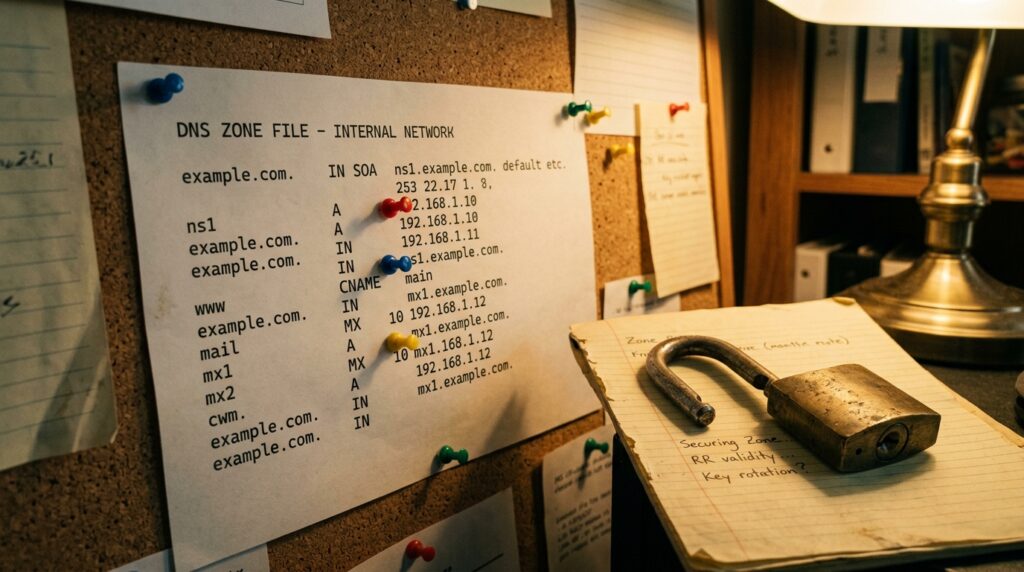
If your team is generating documents, images, or reports using AI tools and passing those outputs through a managed pipeline, there is a metadata question you probably have not answered yet. The files leaving your pipeline may carry cryptographic provenance records tied to user identifiers, tool versions, and creation timestamps. Whether that metadata survives into regulated outputs, and whether it should, is no longer a theoretical concern.
The C2PA standard (Coalition for Content Provenance and Authenticity), founded in 2021 by Adobe, Arm, BBC, Intel, and Microsoft, defines a tamper-evident chain of custody for digital content. Version 2.3, released in January 2026, extended C2PA manifests to cover unstructured text and LLM outputs, not just images and video. A file generated by Midjourney, DALL-E, Adobe Firefly, or ChatGPT in 2026 almost certainly contains invisible cryptographic data identifying it as AI-generated, recording what tool produced it, and potentially logging editing steps. You cannot see it. Your users cannot see it. But a growing number of platforms, search engines, and stock sites are checking for it.
That is the pipeline risk in plain terms: metadata you did not explicitly add is entering your document flows, and you may not know whether it survives transformation, who can read it, or whether keeping it violates your obligations under GDPR Article 5.
The EU AI Act adds a second layer. Article 50, which entered into force in August 2024, requires providers of generative AI systems to ensure that synthetic audio, image, video, and text outputs are marked in a machine-readable format and detectable as AI-generated. Visible disclosures must be clear and distinguishable at first exposure, and public-facing generative models operating in the EU must comply after August 2026. On 17 December 2025, the expert group responsible for guidance published the first draft Code of Practice on transparency of AI-generated content under Article 50. The obligation is real, the timeline is firm, and open-source distribution does not confer exemption from transparency requirements.
The data minimisation problem
GDPR Article 5(1)(c) requires that personal data be “adequate, relevant and limited to what is necessary in relation to the purposes for which they are processed.” This is not a best-practice recommendation; it is a legally binding principle, and it applies at both collection and retention. Article 5(1)(b) further requires that data collected for one specified purpose is not further processed in a manner incompatible with that purpose.
Provenance metadata embedded by an AI tool can include the publisher of the content, the device used, the time and location of creation, and a record of editing steps. If any of those fields contain or can be linked to a user identifier, they constitute personal data under GDPR. Passing that metadata downstream into a contract, a regulatory filing, or a patient document without a legal basis for doing so is a minimisation failure. Fines for standalone Article 5 violations can reach 2% of global annual turnover; where minimisation failures contribute to a data breach, the ceiling rises to 4%.
Provenance metadata was designed to travel with content across the open web. A document pipeline is not the open web. The same property that makes C2PA useful for media authenticity makes it a liability when the output is a regulated record.
Why pipeline transformations are not a safe harbour
A common assumption is that resizing, compressing, or re-encoding an AI-generated asset will strip its provenance metadata and resolve the problem. The C2PA 2.1 specification addressed exactly that assumption. Digital watermarks standardised under C2PA 2.1 are designed to survive modification and platform re-encoding, making them more resistant to removal than manifest-only credentials. WhatsApp, iMessage, and Facebook silently strip standard JUMBF manifests on upload, but a watermark embedded at the signal level may survive the same transformation.
The practical consequence is that you cannot assume your pipeline’s existing processing steps are removing provenance signals. A March 2026 arXiv paper on what its authors call an “Integrity Clash” highlighted potential contradictions between C2PA manifests and invisible watermarks, where multiple overlapping provenance signals can introduce implementation conflicts rather than providing clean, auditable output. More signals does not mean cleaner compliance; it can mean competing claims about the same file.
Because major AI labs serve global user bases from a single model infrastructure, they are rolling out provenance features globally rather than building separate EU-only configurations. If your pipeline calls an image generation or LLM API, the output carries provenance metadata regardless of whether your product targets EU users. You inherit the obligation to understand what that metadata contains and whether it should proceed further.
What auditable document pipelines actually require
Addressing this gap requires controls at three points: ingestion, transformation, and egress.
- Ingestion: Catalogue what provenance metadata your AI generation providers embed by default. Check whether your provider documents its watermarking method, which C2PA version it implements, and what fields contain user-linked data.
- Transformation: Instrument your pipeline to detect whether provenance signals survive each processing step. Do not rely on the assumption that standard re-encoding strips everything; test it explicitly against C2PA 2.1 watermarking behaviour.
- Egress: Define a policy for what metadata is permitted to leave the pipeline in each output class. A social media asset, a regulatory filing, and an internal draft have different minimisation requirements. That policy needs to be enforced at the egress point, not assumed to be handled upstream.
Connectivity as a control point in sovereign pipelines
Managed document pipelines that call external AI APIs introduce a network path that is itself a governance variable. Knowing where your API calls travel, and where the responses are processed, matters when the payload includes user-linked provenance data. We operate 44 points of presence across Europe and the Middle East, with direct peering to AWS, Azure, GCP, Oracle, and Cloudflare at every site. That peering architecture means API calls to the major AI generation platforms resolve within our network perimeter rather than transiting unpredictable public routes, giving customers a defined, auditable path for data that includes embedded provenance metadata. It also means the transformation and egress controls described above can be applied at a layer we manage, not one your team has to bolt on after the fact.
The C2PA standard will continue to mature. Version 2.3 already covers LLM text outputs, and the trajectory of the EU AI Act’s Article 50 Code of Practice points toward more granular obligations, not fewer. Teams that treat provenance metadata as a vendor implementation detail rather than a pipeline input will find themselves retroactively auditing outputs that have already reached regulated destinations. The better position is to treat every AI-generated asset as carrying metadata by default, design your pipeline controls accordingly, and verify that your managed infrastructure gives you the visibility to enforce those controls at egress, not just at generation time.